The Clinical Burnout Cure: Leveraging Generative AI and Hyper-automation to Eliminate Documentation Fatigue
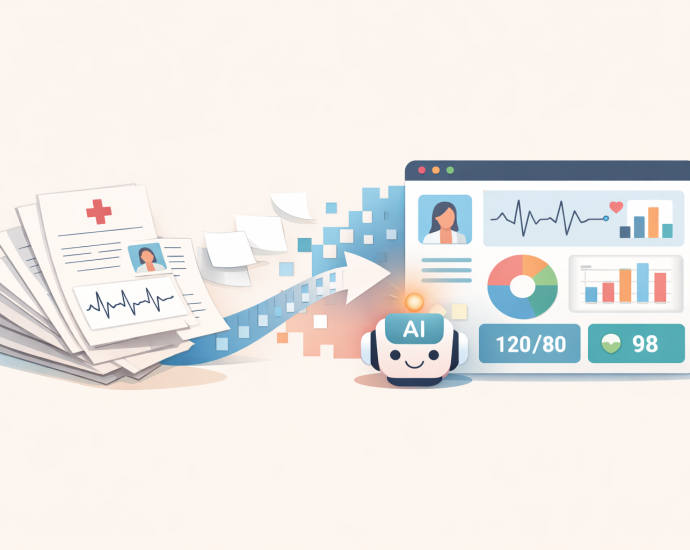
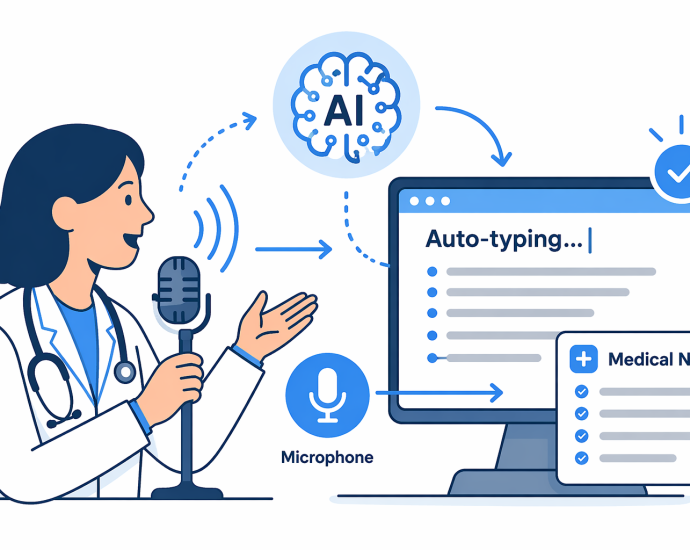
A leading regional healthcare institution has successfully deployed a scalable, cloud-native intelligence interface designed to eliminate the administrative burden weighing down medical staff. By integrating a sophisticated web-based platform into their existing ecosystem, the provider has transitioned from manual data entry to a system of high-speed clinical synthesis. This shift allows practitioners to spend more time with patients while the platform handles the high-volume ingestion and analysis of complex medical histories and diagnostic reports.
Transforming Burden into Impact
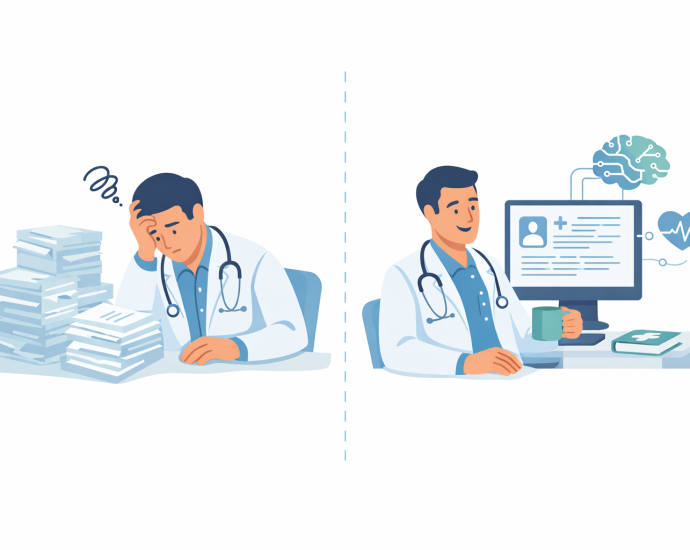
Before this deployment, the institution faced a mounting crisis of unmanageable documentation. Clinicians were required to navigate vast volumes of patient records, historical lab results, and multi-year diagnostic summaries. This process was not just slow: it was professional exhaustion in a digital form. The human cost was evident as the “market window” for timely care narrowed, and clinicians faced the daily frustration of data silos.
“We were effectively acting as data entry clerks rather than medical professionals. Finding a single specific trend in a patient’s five-year history required us to search document by document, page by page, while the clock was ticking.”
This labor-intensive workflow led to significant delays in treatment planning and higher rates of administrative burnout, as the sheer scale of the data exceeded the capacity for manual review.
The Deployed Solution
The solution was designed with a deep understanding of healthcare workflows and regulatory requirements.
At its core, the platform uses advanced LLM orchestration combined with GPU memory optimization techniques such as paging and tiered offloading. This allows the system to process long-context documents, including multi-hundred-page patient histories, compliance audits, and insurance records, without performance degradation.
From a practical standpoint, the system enables:
Rapid extraction of clinically relevant insights from large document sets
Thematic summarization based on user intent, such as patient risk factors, treatment history, or compliance indicators
Context-aware querying that allows clinicians to retrieve precise information without manual review
The platform integrates seamlessly into existing hospital systems, ensuring that users can access insights through a familiar interface without workflow disruption.
Performance & Visibility
The implementation has triggered a cultural shift within the institution. Staff are no longer “searching” for information: they are “validating” insights provided by a high-speed system.
Metric
Before Implementation
After Deployment
Document Review Time
Manual, multi-hour process
Significantly Faster
Processing Cycle
Delayed by administrative backlog
Accelerated Throughput
Data Accuracy
Subject to human fatigue/oversight
Greater Consistency
Security Profile
Standard cloud protocols
Most Secure Cloud-Native Tiers
Leading the Market
This specific approach to clinical intelligence is drawing significant interest from global healthcare networks. By successfully navigating the complexities of healthcare data within a scalable cloud environment, the institution is now positioned as a pioneer. They are currently sharing lessons learned regarding the balance of high-performance computing and clinical workflows, proving that high-end software can solve the most stubborn “burnout” problems in the industry.
Efficient & Agile Delivery
Despite the technical complexity of GPU optimization and the nuances of medical terminology, the partnership prioritized speed and stability. The first working version was brought into production quickly, allowing the institution to see immediate relief in their most burdened departments. This agile delivery ensured that the platform was not a distant promise but a functional tool delivering results in real-time.
Is Your Facility Still Operating in 2015?
The “Information Trap” is a systemic crisis in modern medicine. It costs more than just billable hours: it is eroding your staff’s mental well-being and compromising the patient experience. When your clinical team is drowning in a sea of unstructured data, the answer isn’t to hire more administrative staff to manage the chaos. The answer is to build a high-intelligence system that eliminates it.
We help healthcare organizations transition from data-heavy to insight-driven. From custom medical AI agents that pre-summarize patient histories to fully integrated clinical intelligence solutions, we turn your facility’s fragmented data into a powerhouse of diagnostic and operational efficiency.
Let’s discuss the specific bottlenecks slowing down your rounds or bloating your administrative cycles. We can build a solution that mirrors the success of this regional leader: customized entirely for your unique clinical workflows, specialty requirements, and patient care standards.