Accelerating Life Sciences: How AI-Driven Data Mining and Predictive Modeling Slashed R&D Discovery Cycles
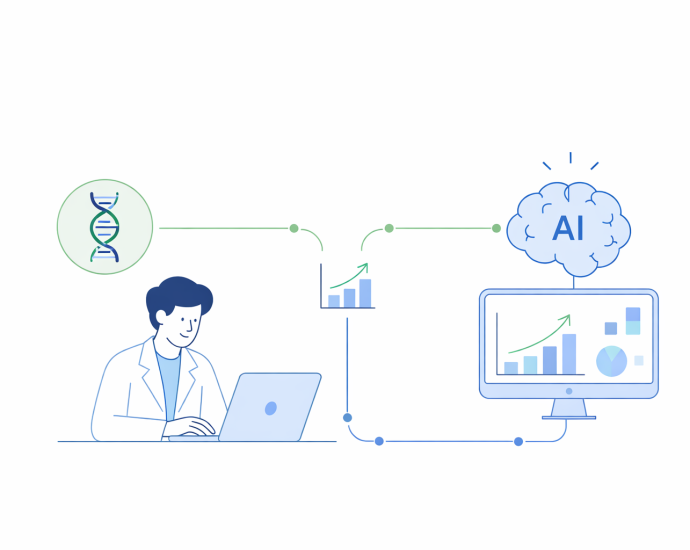
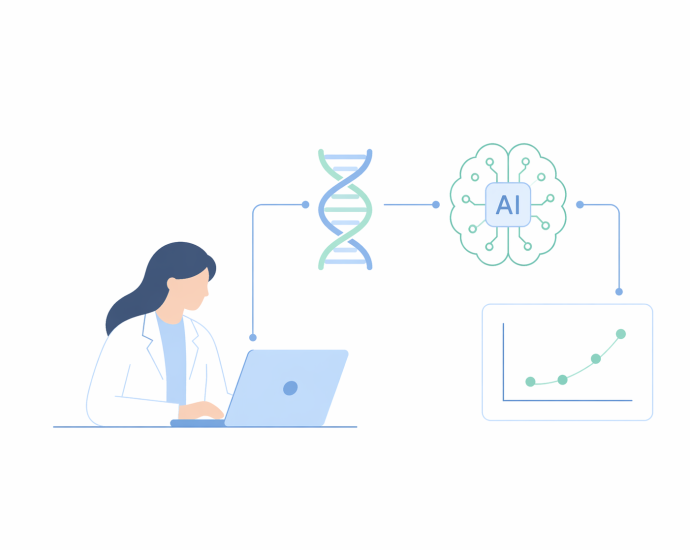
A leading regional medical research institution has successfully deployed a scalable, cloud-native web interface designed to accelerate the discovery phase of life sciences. By integrating advanced data mining and predictive modeling, the platform enables researchers to parse decades of clinical trial data and molecular studies in seconds. This transformation has moved the institution from manual data extraction to a model of continuous, insight-driven innovation, ensuring that breakthroughs reach the clinical stage significantly faster than previous industry benchmarks.
Transforming Burden into Impact
The institution faced an overwhelming challenge: the sheer volume of unstructured medical literature, lab notes, and historical trial results was becoming unmanageable. Thousands of documents were archived in formats that made cross-referencing nearly impossible. This created a significant professional cost where the “market window” for novel drug candidates or treatment protocols would often close before a comprehensive literature review could even be completed.
“Our researchers were forced to navigate our archives document by document. This laborious process meant that critical correlations between old study results and new hypotheses were often missed simply because the human capacity to search was exhausted.”
The resulting delay in processing led to a stagnation in the R&D pipeline, as the time required to validate a single hypothesis was often measured in months rather than days.
The Deployed Solution
The solution is a high-performance web interface that leverages cloud-native elasticity to handle vast research datasets. This deployment ensures that global research nodes can collaborate seamlessly while maintaining peak computational speed.
Advanced LLM Orchestration: The system utilizes Large Language Models to bridge the gap between raw data and actionable medical intelligence, identifying complex patterns across disparate document types.
GPU Memory Optimization: To handle massive document sets, the architecture utilizes advanced memory paging and tiered offloading. This allows the system to process long-context clinical audits and 500-page research papers with high-speed precision.
Thematic Insight Distillation: The interface distills original reports into the specific insights researchers need most: such as "Patient Risk Factors" or "Clinical Compliance Indicators" without requiring technical or coding knowledge.
Performance & Visibility
The implementation has triggered a cultural shift within the research teams. Staff now focus on high-level hypothesis testing rather than the administrative burden of data retrieval.
R&D Efficiency Comparison
Metric
Previous Manual Process
AI-Enhanced Pipeline
Document Review Time
Laborious and inconsistent
Significantly Faster
Approval/Processing Cycle
Months-long verification
Enhanced Capacity
Data Accuracy
Prone to human oversight
Greater Consistency
Security Profile
Standard access controls
Most Secure Cloud Protocols
Leading the Market
This specific approach to predictive modeling in life sciences is currently drawing interest from global research networks. By demonstrating how a scalable web interface can handle complex, long-form medical data, the institution is now positioned as a pioneer in the field. They are frequently invited to share lessons learned regarding the balance of high-performance computing and intuitive data synthesis, setting a new standard for how the industry handles the “big data” problem in drug discovery.
Efficient & Agile Delivery
Complexity did not hinder the timeline. Through a focused partnership and a modular approach to LLM integration, the first working version was brought into production quickly. The agility of the cloud-based deployment model allowed for immediate iterative updates, ensuring that the research staff had access to transformative tools without the traditional multi-year wait times associated with enterprise software launches.
Is Your Institution Still Operating in 2015?
The “Information Trap” is real: it is costing you more than just time; it is costing you your competitive edge in a race where discovery speed determines market leadership. If your research team is struggling to keep their heads above water, the solution isn’t to hire more staff. It is to build a smarter system.
We help research organizations build their future. From custom AI agents to fully integrated data management solutions, we turn your institution’s data into a powerhouse of efficiency.
Let’s talk about your specific bottlenecks. We can build a solution that mirrors the success of this leading regional institution, customized for your unique workflow and scientific focus.