Loading

Call Us Now:

+91 76 2100 2001

Call Us Now:

+91 76 2100 2001
SakratSakratSakrat
  • Home
  • Case Studies
  • The Digital Twin Advantage: Using Real-Time IoT Integration and Predictive Maintenance to Prevent Project Overruns
Case Study

The Digital Twin Advantage: Using Real-Time IoT Integration and Predictive Maintenance to Prevent Project Overruns

A mid-sized enterprise specializing in heavy engineering has successfully integrated a scalable, cloud-native web interface to monitor and manage its fleet of high-value assets. This solution provides real-time visibility into equipment health, allowing the firm to transition from reactive repairs to a proactive maintenance model. By centralizing disparate IoT data streams into a unified digital twin environment, the organization has improved project reliability and ensured that critical machinery remains operational during high-stakes delivery windows.

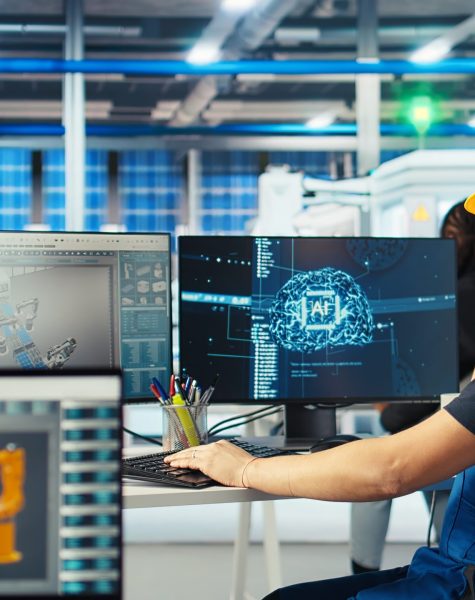
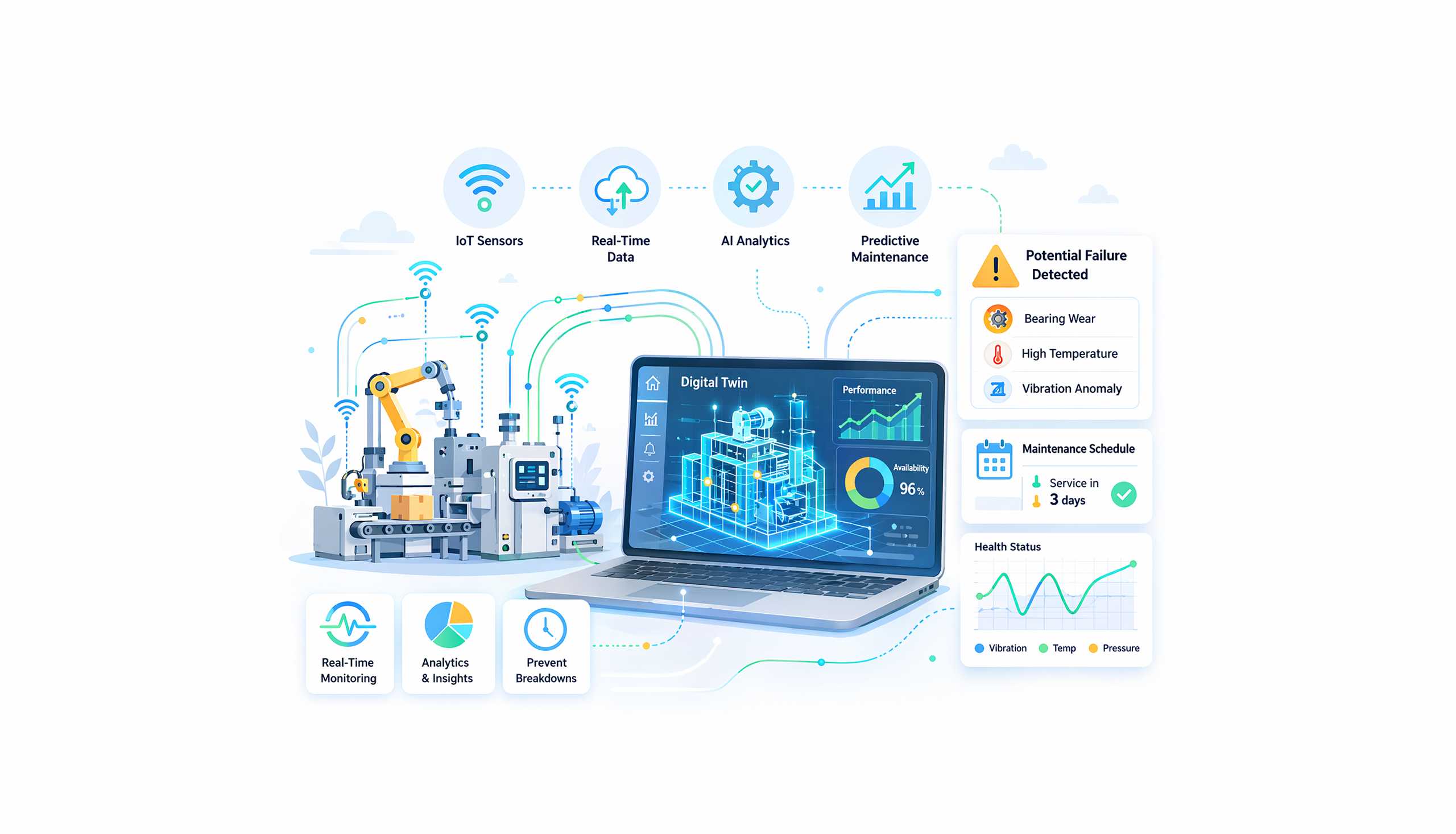
Digital twin dashboard connected to IoT sensors showing real-time analytics, predictive maintenance alerts, and equipment health monitoring in an industrial environment.

Transforming Burden into Impact

Before this implementation, the firm struggled with vast volumes of technical documentation and fragmented sensor data that remained largely unmanaged. The human cost was significant: engineers spent hours manually reconciling maintenance logs with real-time alerts. Searching for specific historical fault patterns was a laborious process that often delayed critical decision-making.

“We were forced to review the status of our machinery document by document and sensor by sensor. By the time we identified a recurring mechanical stress pattern, the market window for project completion had often narrowed, leading to costly delays and equipment downtime.”

  • Industrial & IoT
  • Real-Time IoT Integration and Predictive Maintenance
  • April 16, 2026
  • Sakrat Technologies

This slow processing of operational data led to significant project bottlenecks, as teams could not predict when a component was likely to fail under load.

The Deployed Solution

The strategy focused on transforming raw telemetry into actionable intelligence through advanced technical orchestration.

LLM Orchestration – The system utilizes sophisticated orchestration to interpret long-context documents, such as 500-page structural audits and historical maintenance deeds.
GPU Memory Optimization – To handle these massive datasets efficiently, the architecture employs GPU memory optimization techniques, specifically paging and tiered offloading. This ensures the system remains responsive even when processing complex simulations of the digital twin.
Thematic Insight Distillation – Rather than providing a wall of data, the tool distills original engineering reports into thematic insights. Users can instantly extract specific project data or identify risk covenants related to equipment warranty and safety compliance.

Performance & Visibility

The move to a digital twin model has fundamentally changed how the engineering team operates. The shift from manual oversight to automated, predictive visibility is outlined in the comparison below:

Metric Previous Manual Process Deployed Digital Twin Solution
Document Review Time Laborious and manual Significantly Faster
Processing Cycle Delayed and reactive Enhanced Capacity
Data Accuracy Prone to human oversight Greater Consistency
Security Profile Fragmented data silos Most Secure

Leading the Market

The success of this cloud-native integration is drawing significant interest from global engineering networks. By demonstrating that complex physical assets can be mirrored and managed in a digital environment, the client is now positioned as a pioneer in the industry. They are currently sharing lessons learned regarding the integration of legacy hardware with modern predictive software, setting a new benchmark for how regional firms can compete on a global scale.

Efficient & Agile Delivery

The complexity of synchronizing real-time IoT feeds with a scalable web interface was managed through an agile development framework. Despite the intricate nature of the GPU optimizations required, the first working version was brought into production quickly. This rapid deployment allowed the firm to begin capturing value and protecting project timelines almost immediately after the initial consultation.

Is Your Engineering Firm Still Operating in 2015?

The “Operational Trap” is real: it is costing you more than just maintenance hours; it is costing you your project deadlines and market reputation in an industry where uptime is the ultimate currency. If your engineering team is struggling to keep their heads above water, the solution isn’t to hire more inspectors. It is to build a smarter system.

We help engineering firms build their future. From custom digital twins to fully integrated asset management solutions, we turn your firm’s operational data into a powerhouse of efficiency.

Let’s talk about your firm’s specific bottlenecks. We can build a solution that mirrors the success of this leading regional institution, customized for your unique fleet and engineering requirements.

Have a similar challenge? Let us show you how we can deliver the same results for your business.